Survival Frog Pocket Pump Water Filter Review: Compact Personal Filtration for Emergency Preparedness
Prices and availability subject to change.
Jeff M. evaluates products based on technical specifications, manufacturer data, and aggregated owner feedback rather than direct long-term personal use.
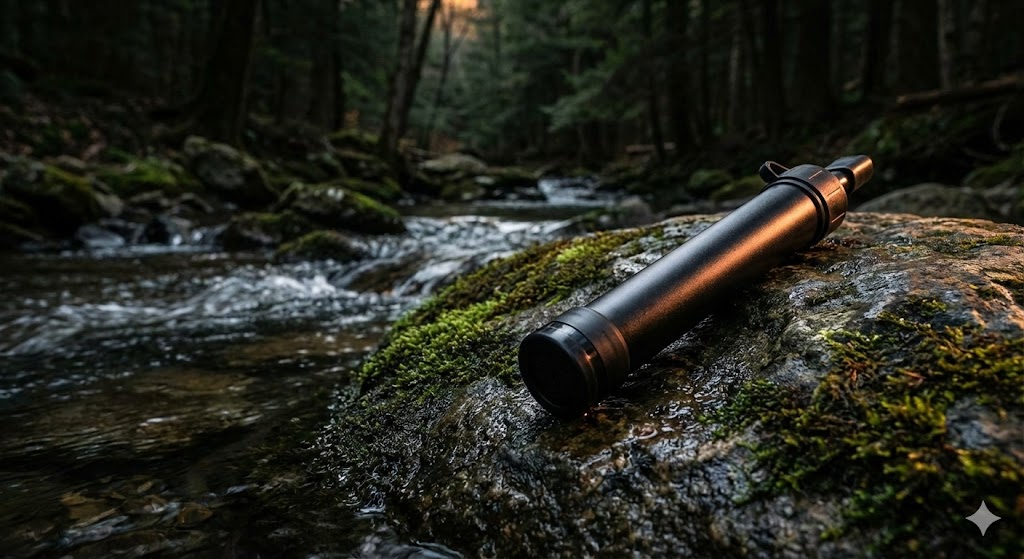
Survival Frog Pocket Pump Water Filter: A practical compact filter at $45 for individual bug-out and backup use.
If you need a lightweight personal filter for a bug-out bag, vehicle kit, or individual emergency backup — one that handles bacteria and protozoa from any freshwater source and genuinely fits in a jacket pocket — this is a solid option at the price. At 4.8 ounces and 7 inches long, it meets the portability claim. At $45, it sits below most personal filters with comparable filtration specs.
This filter does not remove viruses. For clean rural water sources, that gap is acceptable. For flood or sewage contamination scenarios, it is not. If your preparedness planning includes those threat profiles, see the MSR Guardian line for complete biological coverage.
Check Current Price - Survival Frog Pocket Pump Water Filter →
Key Takeaways
- 0.1-micron hollow fiber membrane removes bacteria (99.9999%) and protozoa (99.999%) — does not remove viruses, dissolved chemicals, or heavy metals
- Pump mechanism produces approximately 1 liter per minute — faster than straw filters, can fill containers directly
- 4.8 oz, 7 inches long — genuinely pocket-sized; fits in a cargo pants pocket or jacket pocket
- Rated 100,000-gallon filter life — the math holds up based on hollow fiber membrane longevity; no carbon stage to saturate
- At $45 it is the lowest price point in this cluster; correct for individual bug-out bag use, not a household water system
- For a family at a fixed base during an extended outage, this is a backup tool — not the primary system
Filtration Specifications
| Spec | Value |
|---|---|
| Price | $45 |
| Filter type | Hollow fiber pump filter |
| Micron rating | 0.1 microns |
| Bacteria removal | 99.9999% (E. coli, Salmonella, Cholera, Typhoid) |
| Protozoa removal | 99.999% (Giardia, Cryptosporidium) |
| Virus removal | No |
| Flow rate | ~1 liter per minute |
| Rated filter life | 100,000 gallons |
| Weight | 4.8 oz |
| Length | 7 inches |
| Diameter | 1.5 inches |
What it removes: bacteria, protozoa, sediment, particulates, and visible debris.
What it does not remove: viruses, dissolved chemicals, heavy metals, agricultural runoff, or salt.
For North American rural water sources — streams, lakes, ponds, rainwater collection — bacteria and protozoa are the primary biological threats. This filter addresses them. For scenarios involving sewage contamination or flooding, the virus gap is a real limitation. See What Emergency Water Filters Can't Remove for the full breakdown.
Check Current Price - Survival Frog Pocket Pump Water Filter →
The 100,000-Gallon Rating: How It Holds Up
The capacity claim is one that warrants scrutiny. Hollow fiber membranes earn their longevity differently than activated carbon filters. Carbon stages adsorb contaminants until they saturate — at which point they fail silently. Hollow fiber membranes work as physical sieves: contaminants are mechanically blocked, not absorbed. The membrane does not deplete with use; it degrades with clogging and improper maintenance. A properly backflushed hollow fiber filter can sustain high filter life claims credibly.
The math on 100,000 gallons: at 1 gallon per person per day, that is 273-plus years for one person, or 68-plus years for a family of four. In practice, filter life is constrained by membrane integrity and maintenance adherence, not gallon count. Verified owner reports consistently indicate sustained flow rate with regular backflushing — no sudden performance cliff at a specific gallon threshold.
The longevity claim is credible for a well-maintained hollow fiber system. It is not credible if backflushing is skipped.
Size and Portability
At 7 inches long, 1.5 inches in diameter, and 4.8 ounces, this filter fits the pocket-sized claim without qualification. It fits in cargo pants pockets, jacket pockets, and small bag side pockets. Most personal filters in this category are either heavier, bulkier, or limited to straw-only use.
The pump format adds meaningful capability over a straw design: you can fill containers directly rather than drinking only through the filter. For filling a water bottle, a cooking pot, or a hydration reservoir in the field, the pump mechanism makes the filter practically useful beyond direct consumption.
Pump Mechanism and Operation
The pump design distinguishes this filter from straw-only alternatives. Operation:
- Place intake hose in water source
- Pump handle rhythmically to create pressure
- Clean water exits through the output port
- Approximately 1 liter per minute at steady pace
Pumping requires physical effort — this is not passive. For individual use producing 2–3 liters per day, the effort is minimal. For a household producing 6-plus gallons daily, sustained pumping becomes a real labor commitment. That is the threshold where gravity or higher-capacity systems are more appropriate. See When a Personal Water Filter Isn't Enough for Your Household for the capacity math.
The pump can draw water through the intake hose from shallow sources — a puddle, a low-flow creek, a bucket — that gravity systems cannot access as easily. For field use with variable water sources, this is a practical advantage.
Maintenance Requirements
Filter longevity is directly tied to consistent maintenance. Hollow fiber membranes clog progressively with particulates; backflushing reverses this and restores flow rate.
After each use:
- Backflush with clean water — reverse the flow direction to clear membrane
- Pump 10–15 strokes to remove trapped debris
- Air dry completely before storage — moisture in storage supports biofilm growth
Every 50–100 uses:
- Full backflush cycle
- Inspect O-rings for wear or cracking
- Check pump mechanism for damage
Skipping backflushing accelerates membrane loading and flow rate degradation. A clogged membrane produces less than 1 liter per minute — at some point it produces nothing. Maintenance is not optional if you intend to rely on this filter in an emergency.
Performance in Field Conditions
Based on aggregated owner reports across preparedness and outdoor communities, performance patterns are consistent:
Clear to lightly turbid source water produces clean output at or near the rated 1L/min flow rate with minimal backflush frequency. Turbid or silty source water — visibly muddy water, heavy sediment — loads the membrane faster and requires more frequent backflushing to maintain flow rate. Output water tests clean for bacteria and protozoa across water source types when the filter is properly maintained.
Cold water increases pump resistance — the mechanism stiffens but remains operable. Below freezing, a wet membrane can be damaged if it freezes; store the filter dry or keep it at body temperature in cold environments.
Build Quality
The housing is thick-wall plastic construction. Verified owner reports describe consistent durability through normal field use including drops and exposure to mud and debris. The pump mechanism is intentionally simple — fewer moving parts compared to multi-stage pump filters means fewer mechanical failure points.
The intake and output hose connections are the most common reported failure point in long-term use; inspect these during routine maintenance checks.
Limitations
- No virus coverage — 0.1 micron does not catch virus-sized particles; additional treatment required for sewage-contamination scenarios
- Not a household system — 1L/min pump rate for a family of four produces a throughput problem over multi-week use
- Cold weather — pumping becomes harder below 40°F; wet membrane must not freeze
- Heavy sediment — extremely turbid water requires frequent backflushing and slows effective output
- Not a replacement for stored water — filtration requires a source; this supplements storage, it does not replace it
Cost Analysis
| Option | Cost | Notes |
|---|---|---|
| Survival Frog Pocket Pump | $45 | Pump filter, 100,000 gal rated life |
| LifeStraw Peak 3-In-1 | $99.95 | Straw + squeeze + gravity kit |
| Katadyn BeFree Gravity 3.0L | $79.95 | Gravity-only, 1,000 gal filter life |
| MSR MiniWorks EX | $144.95 | Pump filter, ceramic, field-repairable |
| Bottled water | $1–2/gallon | No filtration capability, finite |
At $45, the Survival Frog is the lowest-cost pump filter with a credible capacity rating in this cluster. The cost per gallon at rated 100,000-gallon life is essentially zero. Even at a realistic 10,000-gallon conservative use estimate, that is $0.0045 per gallon — far below bottled water on a cost-per-gallon basis.
The price premium for the LifeStraw Peak or Katadyn BeFree is justified if you need gravity or multi-mode capability. The Survival Frog is the correct choice if the priority is low cost, pump operation, and maximum portability.
Who This Is For
Buy this filter if:
- You need a compact, low-cost personal filter for a bug-out bag or vehicle kit
- Your scenario involves rural freshwater sources with no sewage contamination risk
- Individual use for 72-hour to short-duration events
Do not buy this filter if:
- You are filtering for more than two people at a fixed base during an extended event — throughput will be a problem
- Your scenario includes flood zones or urban environments with sewage contamination risk — this filter does not cover viruses
- You need passive gravity operation — this requires active pumping per liter
Final Recommendation
The Survival Frog Pocket Pump Filter is a practical entry-level personal filter at $45. For a bug-out bag or vehicle emergency kit where weight and cost are the primary constraints and the threat profile is rural freshwater bacteria and protozoa, it delivers on its specs at a price point below most alternatives.
It is not a household water system, and it is not a substitute for virus coverage in contaminated-source scenarios. Know the limitations before purchasing, and it is a useful piece of a layered preparedness kit.
Check Current Price - Survival Frog Pocket Pump Water Filter →
Frequently Asked Questions
Does the Survival Frog filter remove viruses? No. The 0.1-micron hollow fiber membrane removes bacteria and protozoa but not viruses, which are smaller than 0.1 microns. For North American rural freshwater sources — streams, lakes, wells with no sewage contamination — bacteria and protozoa are the primary threats and this filter addresses them. For flood scenarios or sewage-contamination risk, a purifier with virus coverage is required.
How long does the Survival Frog filter actually last? The 100,000-gallon rating is based on hollow fiber membrane technology — it does not rely on a carbon stage that saturates. In practice, filter life depends on maintenance. Consistent backflushing after each use maintains flow rate and membrane integrity. Neglecting maintenance accelerates clogging. Properly maintained, the filter should provide reliable service well beyond typical personal filter use timelines.
Can the Survival Frog filter fill a water bottle or cooking pot? Yes. The pump mechanism forces filtered water out through an output port — you can direct that output into any container. This distinguishes it from straw-only filters, which require drinking directly through the filter. For filling containers for cooking, group use, or storage, the pump format is more practical than a straw design.
What is the backflush procedure for this filter? Backflushing reverses the flow direction through the membrane to push out accumulated debris. After each use, pump clean water in reverse through the filter 10–15 strokes, then allow to air dry completely before storage. For extended storage, ensure the membrane is fully dry — moisture retained in storage supports biofilm growth and can compromise filter integrity.
Related:
- Emergency Water Filtration Guide
- When a Personal Water Filter Isn't Enough for Your Household
- What Emergency Water Filters Can't Remove
- LifeStraw Peak vs. Katadyn BeFree Gravity
- Building a Complete Home Water Plan: Storage, Filtration, and Treatment
- How Much Water Does a Family Actually Need When the Grid Goes Down?
- When to Upgrade From a Personal Filter to a Gravity System (Real Capacity Thresholds)
- Gravity Filter vs. Pump Filter vs. Straw: What Actually Works Without Power?
- MSR Guardian Gravity Purifier Review: Hands-Free Household Water for Extended Grid-Down
- MSR Guardian Pump vs. MSR Guardian Gravity: Which Purifier Fits Your Preparedness Setup?
- MSR MiniWorks EX vs. Katadyn Vario: Which Mid-Tier Pump Filter Is Worth It for Preparedness?